
The podcast market is not just growing — it’s accelerating. Each year, it expands by roughly +27%, driven by new creators, better platforms, and increasing listener demand. What used to be a niche hobby has turned into a serious business model. Today, monetization comes from multiple streams: ads, subscriptions, listener support, and product sales.
By 2026, around 49% of podcasters earn $1,000+ per month, while top-tier shows break the $100,000+ monthly mark. That gap may sound intimidating, but it actually proves something important: money is already flowing in this space — you just need to tap into it correctly.
Joe Rogan, for example, started his podcast as a casual long-form conversation show. Over time, it became one of the most influential podcasts in the world. His exclusive deal with Spotify was reportedly worth over $200 million.
The takeaway is simple: most successful podcasters didn’t start big.
4 Proven Ways to Monetize Your Podcast in 2026
There are four main ways to turn your podcast into income. Each works differently, and the best creators combine several of them.
Advertising and sponsorships remain the most common method. Brands pay you to mention or promote their products. However, most of the money is concentrated among top podcasters with large audiences. A good example is the podcast “Smart Passive Income” by Pat Flynn. He openly shares that sponsorships became a major revenue stream only after building trust and consistent downloads — not at the beginning.
Paid subscriptions and fan support are growing fast. Platforms like Patreon allow listeners to pay monthly for bonus content. In 2024 alone, podcasters earned over $472 million on Patreon. A well-known case is “Chapo Trap House,” which reportedly earns over $100,000 per month purely from subscriptions. This proves that even without ads, a loyal audience can fully sustain a podcast.
Selling products, courses, or merch works best when you have a strong community. For example, Tim Ferriss uses his podcast to promote books, tools, and educational content. His audience trusts his recommendations, which turns attention into sales. But without that trust, this model doesn’t work.
Live events, speaking, and consulting are additional income streams. Many podcasters use their show as a personal brand platform. For instance, business podcast hosts often get invited to paid conferences or offer consulting services. However, this is usually not the first revenue stream — it comes after building authority.
Before You Start a Podcast: 4 Things You Should Know
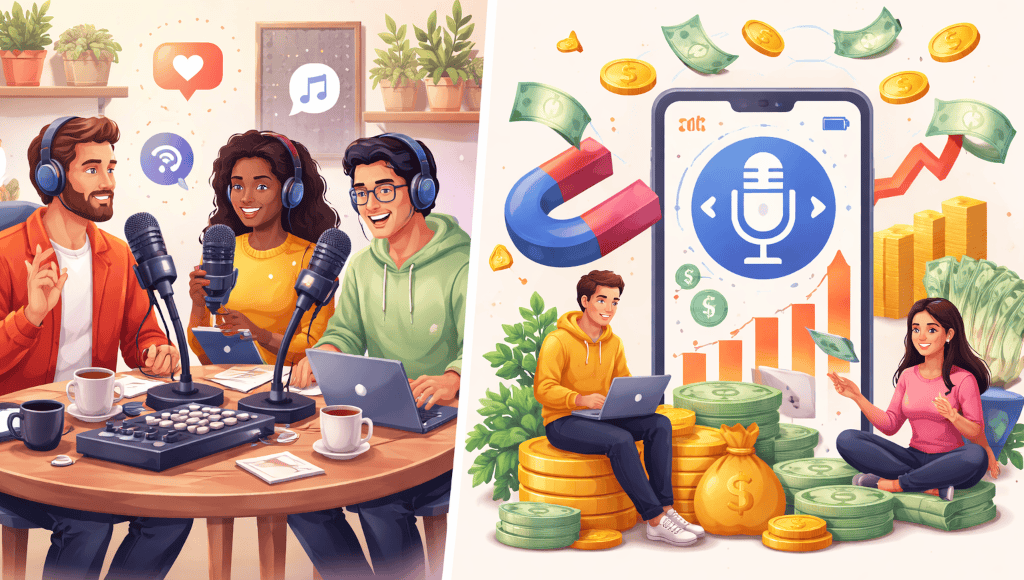
First, competition is massive. There are over 4.1 million podcasts, but only about 17% are actively maintained. This means most people quit early — which creates an opportunity for those who stay consistent. To beat this, focus on a narrow niche instead of trying to appeal to everyone. Specific audiences are easier to grow and monetize.
Second, many podcasts never make money because creators stop too early. A large number don’t even reach 10–20 episodes. The solution is simple but uncomfortable: commit to at least 50–100 episodes upfront. Treat it like a long-term project, not a quick experiment.
Third, platform algorithms matter. Visibility often depends on platforms like Spotify, Apple Podcasts, and YouTube. Even great content can stay hidden. To fight this, don’t rely on one platform — distribute your content everywhere and build your own audience through email lists and social media.
Fourth, real results take time. It can take 1–2 years and over 100 episodes to see serious income. The best way to deal with this is to track small wins: downloads, comments, returning listeners. These signals show growth before money appears.
The reality is tough — but predictable. If you understand these challenges early, you won’t quit when things feel slow.
Are You Too Busy for Success?
Let’s be honest — most people say they’re too busy, but the real issue is lack of structure. A podcast doesn’t require full-time effort at the beginning.
Think of it this way: one episode per week can be recorded in batches. Many successful podcasters record 3–4 episodes in one day, then schedule them. That reduces time pressure and keeps consistency high.
Also, your podcast doesn’t have to be perfect. In fact, many audiences prefer authenticity over polished production. A simple setup, clear voice, and valuable ideas are enough to start.
Recommendations for a successful start
If you want a practical approach, imagine a podcaster speaking directly to you:
“Pick a niche where people already spend money. Business, investing, education — these work because the audience is used to paying. Don’t try to be everything for everyone. Be specific.
Show up every week. One or two episodes. Consistency beats talent here. Most people quit, so if you don’t, you’re already ahead.
Think about money from day one. Even if you don’t monetize immediately, plan it. Will you use sponsors? Subscriptions? Courses? Decide early so your content leads there naturally.
And don’t rely on the platform to grow you. Build your own audience. Use social media, collect emails, talk to your listeners. The platform can change overnight — your audience won’t if you build it right.”
That’s the formula. Not complicated — but not easy either.
If you follow it long enough, your podcast stops being just content. It becomes an asset.